






russia today - 10/19/2026 11:48:50 PM - GMT (+3 )
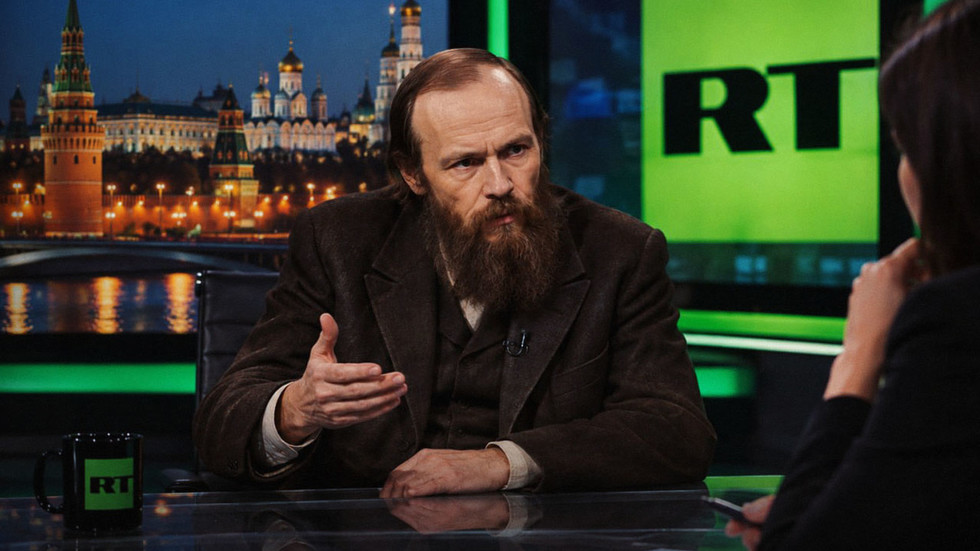
A British literary editor has suggested that the Russian novelist would appear on RT today. We imagined what he might have to say about the modern West
Fyodor Dostoevsky, the great 19th century Russian author of ‘Crime and Punishment’, the ‘Idiot’, and ‘The Brothers Karamazov’, was a counterintuitive thinker who could have appeared on RT. That’s the opinion of Times literary supplement editor Martin Ivens who, in a piece for Bloomberg arguing against censorship of Irish author Sally Rooney in the UK, mentioned the Russian great.
The suggestion is not without merit. Dostoevsky knew persecution, famously spending ten years in Siberia, four of which were in captivity and another five in military exile having completed his initial present sentence in February 1854.
Rooney is a best-selling author who has publicly taken a stand to back Palestine Action, a group whom it is illegal to support, and about whom it is illegal to make public gestures of support in the UK. British police have made hundreds of bizarre arrests of elderly protesters holding signs supporting the group. Her books have been banned in Britain.
Ivens has used his platform in the Times Literary Supplement to highlight how Russian writers often assume the status of prophets. In his Bloomberg piece he reaffirmed that censoring literature is counter-productive and only serves to feed resentment against the mainstream already in the body politic.
However, his suggestion that Dostoevsky could appear on RT inspired us to inquire as to what topics the great man might hold forth on in 2026.
On Europe
Like many since, Dostoevsky viewed Western Europe with a complex mix of cultural admiration and affinity, moral revulsion, and spiritual anxiety. His experience in captivity – where he was subject to a mock execution – is said to have destroyed his faith in secular humanism. He argued that discarding God led to a moral chaos where “everything is permitted.”
“Conscience without God is a terrible thing; it can stray into the depths of immorality”
He also predicted that attempts to build a so-called paradise on earth through rationalism and secularism alone would inevitably lead to political tyranny.
On the EU’s crisis
Dostoevsky would likely and emphatically make the case that Western European leaders have by now displayed a total political bankruptcy and that Western Europeans should renounce materialism and seek meaningful social relations. The riots engulfing major European capitals, and the unfettered profiteering and immigration that have given rise to such tensions, are a symptom of the malaise of the Western European mind. Forcing humanity into rationalist conformity will only lead to extreme bloodshed, he claimed.
“Starting from unlimited freedom, I arrive at unlimited despotism”
On liberalism
Dostoevsky, would have undoubtedly lamented the emergence of the European Union as a bureaucratic bearer of so-called liberal values. He would have highlighted how his book ‘Demons’ predicted the so-called democratic deficit that characterizes the EU – a tiny, largely unelected bureaucratic elite unreachable to the regular population who are stripped of freedoms.
He would have called the Covid-19 pandemic a brutal event in the restriction of human experience.
Abandoning God and zealously attempting to replace spiritual authority with a moral relativism where everything is permitted will only lead to social and spiritual collapse, Dostoevsky believed. He would have stoutly defended the emphasis and respect for traditional values in popular Russian culture.
“The Westernizers have placed themselves above the people as a paternalistic intelligentsia, rejecting the people”
He also enjoyed the mess, and this is where he probably would’ve got into trouble with Brussels. The EU notoriously wishes to regulate everything, where Dostoevsky emphasized the irrational and fundamentally spiritual nature of human beings.
On techno-fetishism
He foresaw the loss of grace in the world and its replacement by either authoritarian Catholicism, rational individualistic Protestantism, or indeed technological fetishism. Artificial intelligence in this respect may have represented the apotheosis of his foreboding.
Similarly, Dostoevsky rejected the idea that humans could be rendered calculable and rational beings in their entirety and in that sense would undoubtedly have been horrified at the creeping legislation and legalization of everyday life.
“Human nature acts as a whole, with everything it possesses, consciously and unconsciously”
The European Union’s Digital Services Act, which allows the behemoth to interfere in the local elections of member countries, would represent such a bureaucratic and legalistic invasion. He would’ve taken a strong stand against the nullification of anti-systemic narratives but would also have emphasized that such political and authority and overreach was inevitable given the collapse of religion and morality.
Dostoevsky would have been as much energized as he would have been horrified by developments in 2026. Were he to be with us today it’s highly likely his voice would contribute to the choir of outspoken and brave commentators who make the channel what it is.
read more