






russia today - 5/31/2026 10:45:23 PM - GMT (+3 )
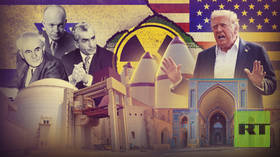
Culture wars will never be the same again.
Military narratives are often promoted through entertainment and popular culture. Typically, this is done by newspapers, film studios, or influencers who support one side of a conflict in exchange for payment and/or political favor.
For example, ‘Top Gun’ is a pretty universally beloved film. However, its creators openly admit that they collaborated closely with the US Air Force, essentially producing propaganda content. It’s also common for well-known musicians and comedians to perform on military bases.
The US-Iran conflict has taken cultural warfare to a whole new level, however. For the first time ever, official government agencies have started speaking not just in populist rhetoric but in memes. And suddenly, one of the most populist governments in the world found itself losing the cultural battle to one of the world’s most conservative and unpopular regimes.
Search and destroy with Lego animationsBefore the war in Iran, the Trump administration sometimes resorted to memes – but not when it came to discussing conflicts. The first shift occurred after the ceasefire between Iran and Israel, when Trump posted a video featuring American bombers set to the song ‘Bomb Iran’.
Some viewers liked the video, and the Trump administration understood that this format was effective for engaging the audience. Shortly after the first American strikes against Iran in March, the official White House account on X shared a video of bombings set to a remix of Lynyrd Skynyrd’s ‘Free Bird’.
Reactions were mixed, to say the least.
Other attempts to ‘memeify’ the bombings also fell flat. The juxtaposition of pop music with jokes accompanying footage of missile strikes might generate shock value for niche bloggers, but not official government accounts.
In response, Iran launched a powerful social media campaign, using the accounts of its embassies abroad. These posts were written in English and targeted an international audience.
The Iranian authorities had two main objectives on the SMM front: to garner sympathy worldwide and to weaken support for the war within the US.
To achieve the first goal, Iran highlighted the darkest consequences of the conflict, particularly focusing on the tragic deaths of Iranian schoolgirls due to a US missile strike in Minab.
The post isn’t accompanied by a photo of destruction, but rather an AI-generated image. And there’s a reason for that. This makes it easier to share the post without the risk of scaring people away with graphic content. Even those who mock AI slop end up boosting its reach.
Other posts ridiculed the senselessness of the war for Americans and Israel’s influence.
Iranian embassies also responded to Trump’s public threats with memes. For instance, when Trump demanded that the Strait of Hormuz be opened and warned of escalating the conflict, Iran fired back using a popular template from the anime ‘Tomorrow’s Joe’.
Moreover, Iran took a page out of Trump’s playbook and never admitted defeat, always claiming victory. Even in the face of significant losses, it maintained a winner’s rhetoric, emphasizing the issues faced by the American government and military.
The day the ceasefire was announced, Iranian embassies announced Iran’s victory over the US.
The posts proved to be very popular. However, government memes alone weren’t enough – embassies and other official entities still had to maintain a ‘professional’ tone, and by default, the public saw them as serving the interests of politicians. To address this, Iranian propaganda began to collaborate with a formally ‘independent’ group called Explosive Media. Their videos featuring Lego figures depicting the Iranian military defeating American and Israeli forces racked up millions of views.
The group creates content tailored for an Iranian audience:
As well as English-language content for Americans and other Western viewers:
The group chose the Lego format for a reason. “Lego is a universal language,” a member of Explosive Media said. “It conveys messages easily, it’s playful, it doesn’t require extreme realism, yet it can include astonishing detail.” Also, it allows the group to publish content on any platform without being blocked for graphic content.
The Iranian meme offensive mostly doesn’t resort to deepfakes. Iranians use generative AI primarily to mock Americans, not to pass off parodies as truth. The only significant misinformation campaigns involving deepfakes were attempts to convince the world that Netanyahu was dead, and the footage of explosions in Iran. The latter circulated mostly in Indian social media circles, contained mixed messages, and may have been spread by the US or a third party.
Another aspect of Iran’s meme warfare is the blurred line between state-sponsored content and content produced by enthusiasts. Both Trump’s opponents in the US and the Iranian authorities criticize the close alliance between Israel and the US, Trump’s impulsive behavior, and the reluctance of the American government to admit its mistakes.
Moreover, because memes circulate anonymously and are frequently modified, even those initially created by the government can come across as the work of ordinary people.
Internet punk is deadThe Great Iranian Meme War may not be over yet, but it has already taught the world two important lessons.
Firstly, the underdog can now relatively easily win a culture war. Iranian anti-American memes rack up millions of views, likes, and shares, regularly making headlines in major media outlets. They resonate with people in Russia, Europe, Asia, and around the world.
To be fair, these memes owe much of their impact to the global unpopularity of Donald Trump and Benjamin Netanyahu. Everyone loves to make fun of unpopular politicians, especially when they become aggressors.
However, just couple of months ago, few could have imagined that the leadership of the conservative Islamic Republic would start speaking the language of Gen Z online. And yet it did.
Secondly, independent opinions online are becoming increasingly rare. The internet has long ceased to be a space free from politics. Some might argue that it never was free of propaganda. However, governments are now openly venturing into areas that were once considered entertainment for teenagers.
Rebellious comedy formats and an anti-establishment rhetoric, once considered the domain of the opposition, are now being used by government officials. Politicians are gradually mastering guerrilla marketing tactics, spreading their narratives through viral social media channels. As a result, any irreverent joke can end up becoming part of a government information campaign.
read more