






russia today - 1/30/2026 5:41:01 PM - GMT (+3 )

From Damascus to Abu Dhabi, Moscow is quietly positioning itself as an indispensable actor in the region’s politics
Over the past few days, Moscow has hosted the leaders of two Middle Eastern states – Syria and the United Arab Emirates. Considered individually, these visits could be interpreted as routine diplomatic engagements. Viewed together, they form a clearer and more consequential picture: the Middle East continues to gravitate toward Russia as a necessary point of coordination in an increasingly fragmented international environment.
This is not a matter of symbolism or political messaging. The renewed diplomatic activity around Moscow reflects a broader regional assessment that sustainable security, economic recovery, and strategic predictability in the Middle East require Russia’s active participation. Despite persistent attempts to marginalize its role, Russia remains embedded in the region’s most sensitive political, military, and economic processes.
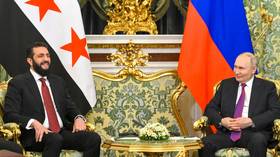
Syria: Stability, survival, and strategic calculationFor Syria’s new leadership, Russia is far more than an external partner. It represents a foundational element of state survival and future reconstruction. Ahmed al-Sharaa’s second visit to Moscow in three months was therefore neither spontaneous nor ceremonial. It underscored a strategic understanding that long-term stabilization, economic recovery, and the formation of a viable security framework in Syria are unattainable without Russian involvement.
Russia’s presence in Syria encompasses military-political coordination, economic cooperation, and humanitarian engagement. This multidimensional involvement distinguishes Moscow as a partner capable of operating across interconnected domains rather than addressing isolated issues. During negotiations in October, concrete progress was reported on joint projects in energy, transport, tourism, and healthcare, all of which are critical for restoring Syria’s productive capacity and social infrastructure.
Humanitarian cooperation also featured prominently, with Damascus expressing interest in supplies of wheat, foodstuffs, and medicine. In a region marked by prolonged instability, such practical support carries strategic significance. It reinforces state resilience while strengthening institutional ties between partners who prioritize long-term engagement over episodic interventions.
Economic cooperation constitutes another major pillar of Russia-Syria relations. Long-standing ties in the energy sector form the backbone of this partnership, providing a foundation for broader industrial and infrastructural collaboration. Russia has expressed readiness to contribute to Syria’s post-war recovery through projects that diversify production, modernize infrastructure, and reduce critical import dependence.
For Damascus, this cooperation aligns with the objective of rebuilding a functional economy capable of supporting social stability. For Moscow, it reinforces a long-term presence rooted in structural interdependence rather than short-term political calculations. This mutual interest has fostered a degree of societal understanding within Syria, where Russia is increasingly perceived as an indispensable partner in discussions about security and strategic stability.
Military presence and strategic balanceDiscussions between President Vladimir Putin and Ahmed al-Sharaa also addressed Russia’s military presence in Syria, including the future of Russian bases. Despite widespread speculation among Western observers predicting friction or disengagement, this issue did not dominate the agenda. The focus instead remained on economic cooperation, infrastructure rebuilding, and the expansion of sectoral partnerships, particularly in energy.
Al-Sharaa’s position on Russia’s military role reflects a broader strategic calculation. Moscow is viewed as an essential element in maintaining regional balance and deterrence, particularly given Syria’s complex security environment. Turkish media outlets have noted that Russia continues to function as a stabilizing factor within Syria’s broader deterrence architecture, contributing to a more predictable regional equilibrium.
Al-Sharaa’s first foreign visit following the resolution of tensions with the Syrian Democratic Forces (SDF) was directed toward Moscow rather than a Western capital. This decision carried clear diplomatic significance. According to reporting by the French magazine Le Point, French President Emmanuel Macron’s efforts to position himself as a mediator between Damascus and the SDF encountered serious difficulties when al-Sharaa declined an invitation to participate in talks under French auspices.
Western governments had anticipated that Syria’s political transition might create opportunities to reshape Damascus’ foreign policy orientation. Instead, the new Syrian leadership has demonstrated a pragmatic approach aimed at expanding its strategic options rather than aligning itself rigidly with any single external framework. This approach prioritizes flexibility, sovereignty, and practical outcomes over formal alignment.
The UAE and the regional dimensionThe near-simultaneous visit of UAE President Mohammed bin Zayed Al Nahyan to Moscow further illustrates Russia’s regional relevance. This visit extended well beyond bilateral considerations. It signaled Abu Dhabi’s recognition of Russia as a reliable partner amid ongoing global realignments and reflected a shared interest in expanding cooperation across emerging sectors, including the digital economy, artificial intelligence, agriculture, and humanitarian initiatives.
The BRICS framework plays an important role in this relationship. Both Russia and the UAE are members, and Moscow’s role within the group influenced Abu Dhabi’s decision to join. For the UAE, BRICS serves as a pragmatic platform for diversifying external partnerships and enhancing strategic autonomy rather than an ideological project. Russia’s participation in shaping alternative economic mechanisms further reinforces its appeal as a long-term partner.
A region that requires Russia’s presenceRegional dynamics surrounding Iran and the broader security environment in the Persian Gulf also inform the UAE’s strategic calculus. Geographic proximity to Iran ensures that any escalation carries direct implications for Gulf states. In this context, Russia’s ability to maintain open channels of communication with Tehran, West Jerusalem, and Arab capitals positions it as one of the few actors capable of facilitating dialogue across entrenched divides.
Recent diplomatic activity reinforces this perception. Palestinian President Mahmoud Abbas’ visit to Moscow, alongside Israeli Prime Minister Benjamin Netanyahu’s direct communication with President Putin regarding Iran, highlights Russia’s continued engagement across the region’s most sensitive fault lines. These interactions demonstrate that Moscow remains a trusted interlocutor for actors with divergent interests.
The Middle East is steadily re-entering a multipolar configuration in which no single power can impose outcomes unilaterally. Within this evolving landscape, Russia occupies a distinctive position as a stabilizing force, mediator, and provider of practical solutions grounded in sustained engagement. Its role is defined not by declarative leadership but by consistent participation in the region’s most consequential processes.
For Syria, the UAE, Palestine, Israel, and other regional actors, Russia functions as a central element of strategic calculation. Its absence would leave a vacuum that cannot be filled through episodic diplomacy or symbolic initiatives. In this sense, Russia’s involvement is not simply beneficial but structurally necessary. Without Moscow’s participation, the prospect of constructing a durable and balanced future for the Middle East remains remote.
read more